

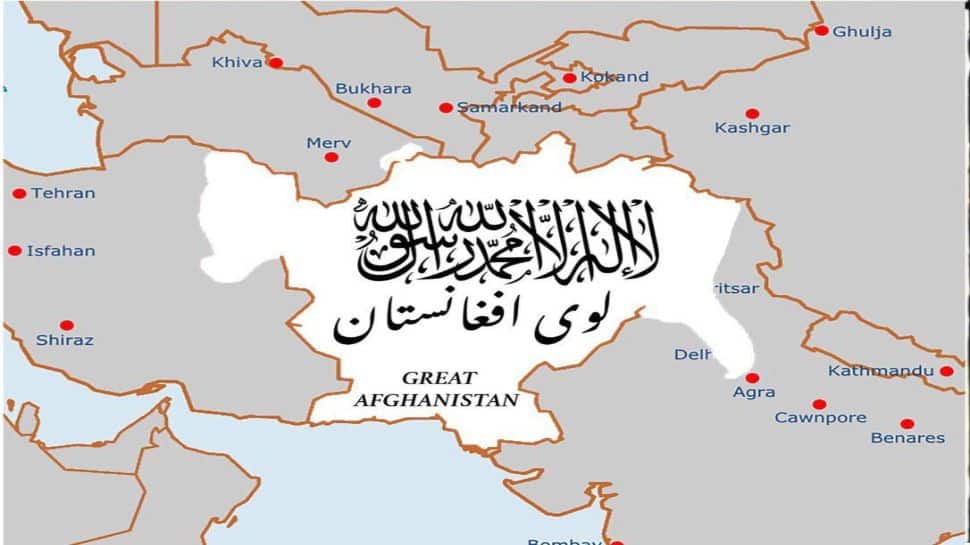
A recently revealed map, labeled ‘Greater Afghanistan’ by the Taliban, has intensified friction between Kabul and Islamabad by incorporating several Pakistani regions into Afghanistan. The map highlights areas within Khyber Pakhtunkhwa and Pashtun ethnic belts, signaling a clear rejection of the Durand Line border. This long-standing dispute over the border has been a persistent cause of clashes between Afghan and Pakistani security forces.
The Taliban’s historical narrative has always contested the Durand Line, viewing it as an artificial colonial imposition that divided ethnic Pashtuns. The ‘Greater Afghanistan’ map, officially presented to Deputy Interior Minister Mohammad Nabi Omari in Khost province, conspicuously omits this border. Reports suggest the map illustrates Pakistan fractured by ethnicity, with certain segments designated as Afghan territory. At the ceremony, Omari issued a stern warning to Pakistan, pledging that Afghanistan would defend itself against any new conflict with the same resolve displayed in past wars.
The situation was further inflamed by explicit threats broadcast during a Taliban military parade. Chants and songs directed at Pakistan included a declaration to “raise the white flag in Lahore and burn Islamabad.” This aggressive posturing, coupled with the symbolic claim over Pakistani lands, has raised serious concerns in Islamabad about potential unrest and instability within its borders, particularly in its Pashtun-majority areas.