

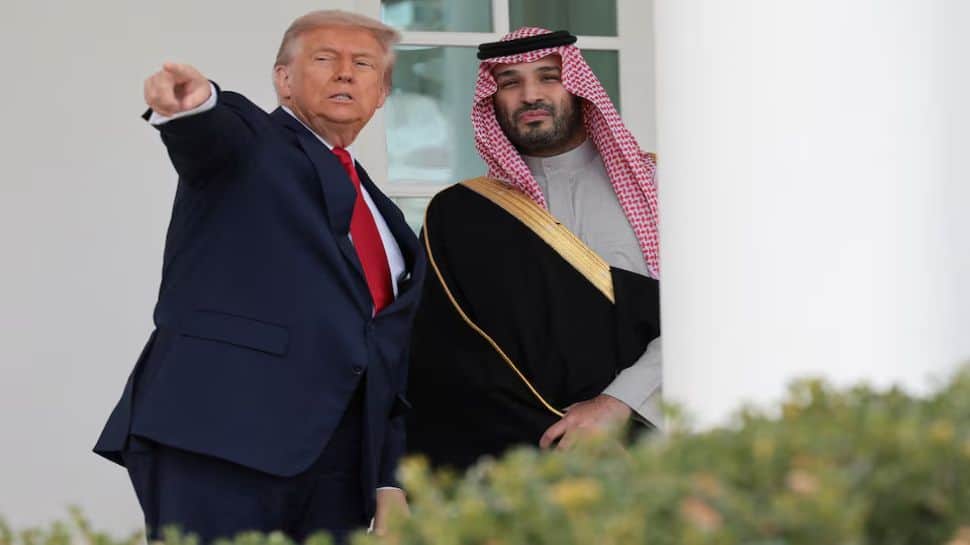
A significant diplomatic development emerged from Washington as Saudi Crown Prince Mohammed bin Salman met with President Donald Trump. The highly anticipated meeting, marked by a grand ceremonial reception, underscored the robust relationship between the US and Saudi Arabia.
The core of their conversation centered on Saudi Arabia’s potential participation in the Abraham Accords, a normalization agreement with Israel. Crown Prince Mohammed conveyed that Riyadh is amenable to joining, but only if it paves the way for a credible two-state solution for Palestinians. He clearly stated, “We want to be sure that we secure a clear path (to a) two-state solution.”
President Trump confirmed productive discussions on how to expedite this process, reinforcing Saudi Arabia’s continued adherence to the Arab Peace Initiative. The two leaders explored various scenarios for resolving the Israeli-Palestinian conflict.
In a major foreign policy advancement, a defense pact between the United States and Saudi Arabia was reportedly finalized. This agreement includes the provision of advanced F-35 fighter jets to Riyadh, a move that President Trump indicated would not involve any compromise on the aircraft’s capabilities, despite US policy to maintain Israel’s qualitative military edge.
The ongoing tensions with Iran also featured prominently. President Trump reiterated his stance on confronting Iran’s nuclear program while simultaneously expressing openness to dialogue. Crown Prince Mohammed pledged Saudi support for any US-Iran diplomatic efforts.
Furthermore, the economic dimension of the bilateral relationship was strengthened. Saudi Arabia committed to significant investments in the American economy, projected to reach substantial figures, creating numerous opportunities in emerging technological fields.
Ultimately, the visit solidified Saudi Arabia’s position: normalization with Israel is on the table, but the critical prerequisite remains a tangible and irreversible commitment to establishing a Palestinian state. All other bilateral agreements and discussions appear to hinge on this central demand.