

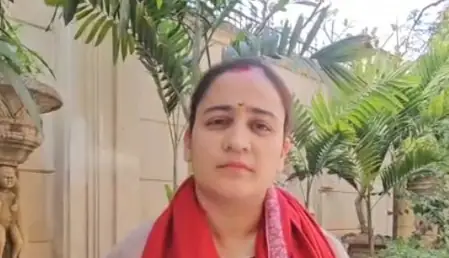
Uttar Pradesh BJP leader Aparna Yadav has ignited controversy by claiming a full-fledged syndicate of love jihad and conversions is functioning unabated at the renowned King George’s Medical University (KGMU). In a passionate public rally, she urged swift intervention to safeguard the institution’s sanctity.
Detailing the modus operandi, Aparna revealed how perpetrators infiltrate student circles, building trust through feigned romances. ‘The endgame is conversion by coercion, shattering lives in the process,’ she declared, supported by affidavits from distressed families. She alleged involvement of non-teaching staff and off-campus accomplices.
KGMU, a cornerstone of medical training in North India, grapples with this shadow over its illustrious past. Aparna criticized the administration for prioritizing academics over ethics, calling for governor-led oversight and anti-radicalization workshops.
Her narrative weaves in state-wide patterns, praising UP’s stringent laws while decrying enforcement gaps. Transitioning from SP legacy to BJP vanguard, Aparna’s credibility on social issues bolsters her stance. Attendees, including affected parents, vowed community watch.
Digital amplification has been swift, with viral clips prompting police inquiries. Rival camps accuse her of stoking tensions, but Aparna insists facts will vindicate her. Preliminary reports hint at prior anonymous complaints ignored by authorities.
The implications extend beyond KGMU, questioning safety protocols in hostels and interfaith interactions nationwide. Advocacy groups are pushing for mandatory background checks on admissions.
In a stirring close, Aparna envisioned campuses as fortresses of knowledge, impervious to divisive agendas. Her allegations, if substantiated, could lead to landmark reforms, reinforcing commitment to cultural preservation in modern India.