

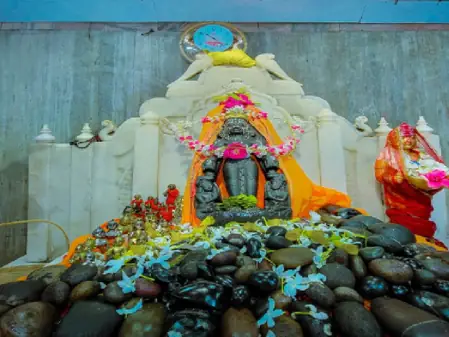
Deep in Bihar’s rugged terrain, Mandar Parvat guards one of Hinduism’s greatest unsolved mysteries at the Madhusudan Temple. Annually, on the cusp of Makar Sankranti, its holy kund drains to nothingness in mere hours, reigniting debates between faith and reason.
This isn’t hyperbole. Documented since the 19th century by British surveyors, the event aligns flawlessly with the solar calendar. The temple, enshrined with Vishnu’s Madhusudan form—the nectar slayer—overlooks the kund, which holds ritual importance for purification baths.
Devotees narrate vivid accounts: ‘We watch in silence as the water whispers away,’ shares temple mahant Swami Vishwanath. No visible drainage, no evaporation—pure vanishing. Hydrologists attribute it to connected aquifers influenced by monsoonal recharge and barometric pressure, but the timing screams celestial orchestration.
After drying, the exposed kund bed becomes a sacred arena for Sankranti havans and dances. Water resurgence, peaking around Paush Purnima, symbolizes life’s eternal flow. The mountain’s lore extends to housing footprints of celestial beings and hidden Amrit pots, per puranic tales.
Archaeologically rich, Mandar reveals Ashokan edicts, Gupta-era sculptures, and microliths from hunter-gatherers. Conservation efforts now include digital mapping to preserve its fragility amid rising visitors.
As Makar Sankranti dawns, the temple buzzes with til-gud prasad and ganga snan echoes. This phenomenon transcends explanation, cementing Madhusudan Temple as a beacon of the inexplicable in modern India.