

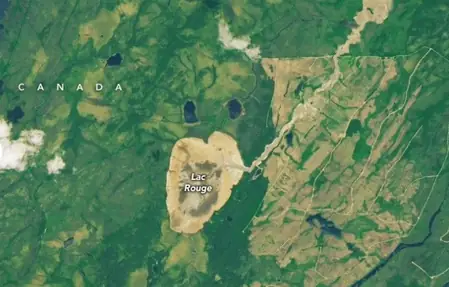
Quebec’s Lake Rouge made headlines in May 2025 by simply ceasing to exist, a phenomenon now thoroughly explained by NASA’s satellite forensics. The July 2025 Earth Observatory study leverages Landsat-9 data to chronicle one of nature’s most abrupt freshwater evacuations.
Visual proof is stark: June 2024 imagery depicts a robust lake; June 2025 shows desolation. From April 29 to May 14, waters catastrophically drained via a spontaneous 10-km channel to an adjacent lake—an ‘outburst flood’ defying norms for standard lakes.
Analysis pins the breach on intensified melt from heavy winter snows overpowering eroded banks. Historical wildfires and timber harvesting had critically undermined these earthen walls, priming the system for rupture.
Corroborating reports from space.com and peers in August reinforced NASA’s narrative, framing it against rising global temperatures. The event challenges assumptions about lake stability.
Ultimately, Lake Rouge transcends local lore, fueling discourse on climate’s hand in geological mayhem. With calls for proactive interventions like bolstered remote sensing and habitat restoration, it exemplifies the urgent pivot needed to protect imperiled water resources amid planetary upheaval.