

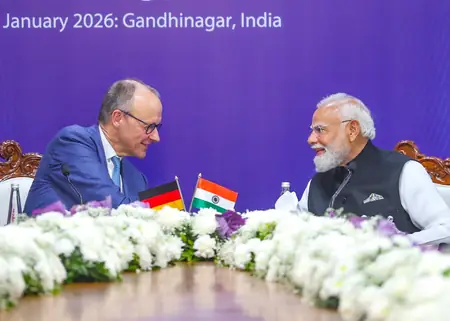
Marking a historic high, India-Germany bilateral trade has exceeded $50 billion, with fresh MoUs signed to propel future growth. These pacts represent a strategic convergence of industrial strengths and visionary policies.
Covering sectors from sustainable mobility and biotech to quantum computing and artisan skills, the agreements were exchanged during a virtual-physical hybrid summit. They align with global agendas like net-zero emissions and digital sovereignty.
Trade statistics confirm a $52.3 billion exchange last year, fueled by a 12% rise in mutual shipments. India’s auto ancillaries and chemicals found strong markets in Germany, reciprocated by exports of plastics and medical devices.
Contextually, this boom ties into broader EU-India dialogues and Germany’s ‘Ostpolitik’ pivot eastward. Corporate giants like Bayer and Mercedes-Benz are scaling operations, creating high-skill jobs and tech transfer opportunities.
The MoUs incorporate actionable timelines, including pilot projects in solar tech and EV charging networks. ‘Together, we engineer tomorrow,’ echoed summit declarations. Investment pledges target underserved regions, promoting inclusive development.
In summary, this milestone fortifies supply chain security and innovation pipelines. With ambitious targets set for 2030, India and Germany are poised to lead in ethical globalization, benefiting citizens on both sides.