

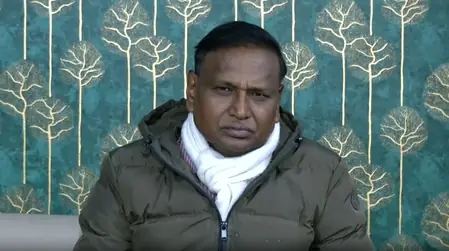
A fresh political row has broken out with Congress heavyweight Udit Raj directly taking on Maulana Arshad Madani over the latter’s controversial observation on religious radicalism. Madani’s remark that ‘kattarparanthi’ or hardliners exist across Hindu and Muslim lines has been met with fierce opposition.
During a virtual presser, Raj articulated his position clearly: ‘Blanket statements ignore power dynamics and historical injustices. True unity comes from truth, not contrived balance.’ His words have galvanized supporters who view Madani’s comment as evasive.
The Jamiat Ulama-i-Hind head made the statement at an anti-extremism conclave, stressing shared responsibility. Yet, Raj and others see it as minimizing documented asymmetries in radical activities.
Known for his transition from BJP to Congress and advocacy for Ambedkarite ideals, Udit Raj brings authenticity to his arguments. He cited statistics from government reports on hate crimes to bolster his case.
The timing is poignant, coinciding with debates on national security and minority protections. Opposition circles buzz with speculation on how this affects INDIA bloc cohesion.
Madani’s organization, with its vast network of madrasas and relief work, wields soft power among Muslims. Raj’s riposte appeals to Dalit and OBC voters sensitive to perceived biases.
Commentators urge de-escalation, warning that endless retorts benefit extremists. Raj proposed actionable steps like joint monitoring committees for hate speech.
This confrontation highlights enduring challenges in India’s secular democracy, where leaders must confront radicals without fracturing alliances. As discussions continue, the focus shifts to solutions over slinging mud.