

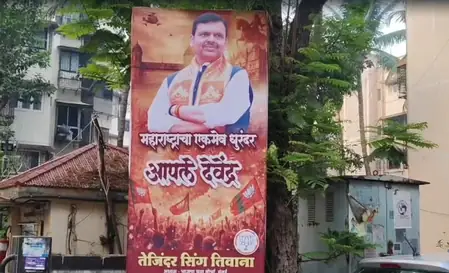
Mumbai wakes up to a political statement plastered across its skyline: posters of Devendra Fadnavis with the moniker ‘Maharashtra’s Powerhouse.’ Celebrated after BJP’s knockout in municipal elections, this imagery crowns him as the mastermind of the party’s city-centric strategy.
Delving into the polls, BJP’s win was built on a foundation of targeted promises—smart city upgrades, youth employment schemes, and women’s safety initiatives. Fadnavis, drawing from his CM stints, infused the campaign with pragmatic vision, outmaneuvering fragmented opposition.
The posters reflect BJP’s aggressive branding push, transforming electoral success into visual dominance. They’re timed perfectly ahead of assembly polls, aiming to etch Fadnavis’s image as synonymous with progress and strength.
Detractors label it as vanity projection, but numbers don’t lie: BJP’s vote share spiked in urban pockets, signaling a realignment. Fadnavis’s negotiation skills and policy focus have made him indispensable.
This moment transcends celebration—it’s a blueprint for BJP’s future. With Fadnavis front and center, the party eyes a stranglehold on Maharashtra’s urban vote bank. The posters aren’t just paper; they’re promises of power consolidated.