

Tensions in BRICS maritime ties surfaced as India stayed away from a high-profile naval exercise in South Africa, which MEA dismissed as an informal South African project rather than a bloc-wide endeavor. ‘Will for Peace 2026’ concluded recently, spotlighting absences and alliances.
MEA’s Randhir Jaiswal was unequivocal: ‘This was South Africa’s solo initiative with some BRICS participation. Lacking institutional backing, it’s not a BRICS staple, and India has no history in these.’ The statement responded to media buzz over India’s non-involvement.
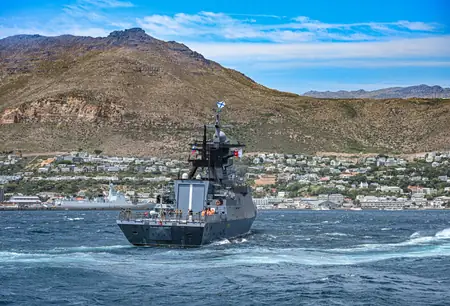
From January 9 to 16, navies drilled in South African seas on maritime strikes, pirate rescues, joint SAR, and formation tactics. China’s destroyer Tangshan and supply vessel Taihu synced with Russia’s corvette Stoykiy and South Africa’s frigate Amatola for intense, multi-domain practice.
South Africa’s December readout positioned it as a BRICS Plus intensive for security operations, drills enhancing interoperability, and serials protecting maritime commerce. The guiding principle: unified safeguards for shipping and economic corridors, promoting shared procedures and peaceful initiatives.
Chinese reports highlighted fluid maneuvers—line-ahead navigation, formation alterations, crew coordination across nations for strikes, hijack responses, rescues, and more. Sequential sessions covered comms, ground defenses, and air support.
New Delhi favors IBSAMAR, uniting India, Brazil, and South Africa navies; the prior round was October 2024. This selectivity underscores strategic focus amid expanding BRICS naval experiments.
Geopolitically, India’s opt-out signals caution toward China-dominated formats, prioritizing autonomy in a vital theater. With disruptions like Houthi attacks, such drills gain urgency, but India’s path emphasizes reliable, equal-footed partnerships over opportunistic joins.