

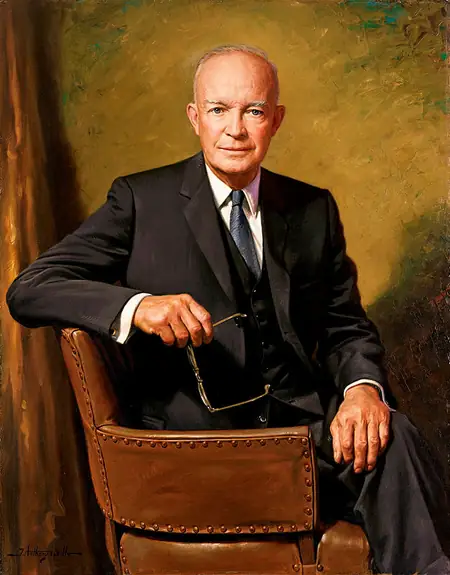
Few presidential farewells pack the punch of Dwight Eisenhower’s. Broadcast live in 1961, it spotlighted the ‘military-industrial complex’—a term that crystallized fears of entangled interests eroding public will. The World War II icon didn’t mince words: this alliance could propel America into wars not for defense, but for dividends.
Eisenhower’s perspective was forged in fire. He’d overseen the mightiest military machine ever, yet recognized postwar changes. Arms production persisted, employing millions and bankrolling campaigns. Lobbyists whispered in congressional ears, tilting budgets toward bombers over bridges.
‘A vital element in keeping the peace,’ he called the military, but only under scrutiny. He implored citizens to question, journalists to probe, and leaders to deliberate. The speech extended to academia and labs, warning against government R&D captive to secret agendas.
Subsequent history—the Gulf of Tonkin, Iraq invasions, ballooning black budgets—mirrors his prophecy. In today’s landscape of hypersonic missiles and space forces, where Silicon Valley codes kill shots, Eisenhower’s voice cuts through: democracy thrives on awareness, not autopilot armament.