

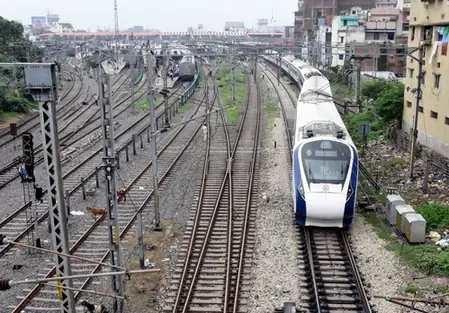
The numbers tell a compelling story of progress: India’s high-speed railway tracks have precisely doubled over 11 years, as per government disclosures. This revelation in Parliament paints a vivid picture of accelerated modernization.
Starting at roughly 5,200 km in 2014, the network now boasts 10,900 km capable of high velocities. Credit goes to visionary projects blending Japanese tech, indigenous innovation, and fiscal prudence.
Headline-grabber: the 12-coach bullet train poised to link Mumbai and Ahmedabad at 320 kmph. Tenders for rolling stock are out, with trials slated for 2026. Complementing it are 102 Vande Bharat routes, averaging 83% occupancy.
Infrastructure blitz includes 5,300 km of doubling/tripling tracks, zero-based safety upgrades, and solar-powered stations. Passengers benefit from Wi-Fi at 6,000 stations and real-time tracking apps.
Economic ripple effects are profound: rail freight share up to 38%, manufacturing corridors activated, and tourism revenues soaring. ‘Tracks doubled, ambitions tripled,’ quipped an official.
Headwinds include NGT clearances and debt servicing, but PPP models are gaining traction. Horizon scanning reveals 20 new corridors, maglev explorations, and carbon-neutral goals by 2030.
This doubling isn’t mere statistic—it’s the backbone of New India’s mobility revolution.