

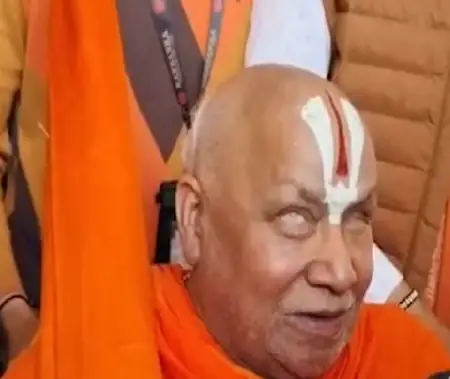
Breaking his silence on the high-profile Sangam Ghat imbroglio, Jagadguru Rambhadracharya has turned the tables on Swami Avimukteshwaranand’s grievances. The self-styled Shankaracharya’s indefinite protest follows a blocked Mauni Amavasya ritual procession, notice on his title, and simmering saintly dissent.
With characteristic candor, Rambhadracharya proclaimed, ‘No wrong was done to him—he did wrong himself.’ He dissected the flashpoint: Ghat norms forbid parades; foot access is the norm, which police politely suggested amid the crowd. Defiance sparked the melee, not malice.
‘I’m the Jagadguru; he’s not,’ he affirmed, lending weight to administrative queries. The sant fraternity has long murmured doubts, branding the swami’s barbs at authorities as self-sabotage that empowers Dharma’s foes.
Politics intruded via Digvijaya Singh’s Madhya Pradesh tirade against RSS and government over MGNREGA. Envisioning peril for minorities under Hindu Rashtra, Singh posited ‘Hindu’ as a foreign linguistic artifact from Persian ‘Sindhu’ tweaks, preferring Sanatani self-identification.
‘He understands zilch about Shastras,’ Rambhadracharya retorted. This verbal joust captures the zeitgeist: seers safeguarding orthodoxy against populist spins on heritage.
Avimukteshwaranand’s standoff endures, but Rambhadracharya’s verdict spotlights discipline’s primacy in piety. In an era of viral spiritual spats, it reminds that true authority flows from compliance, not confrontation—potentially reshaping how Hindu processions navigate public spaces.