

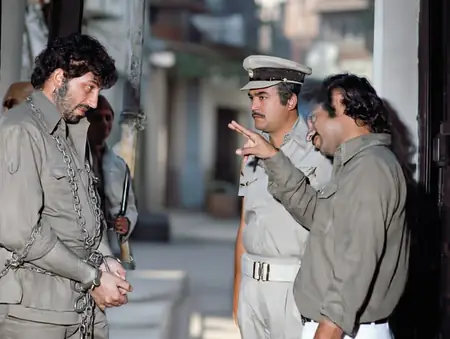
Few films capture the soul of India like Sholay. Ramesh Sippy’s 1975 epic, with its razor-sharp dialogues, turned actors into archetypes and lines into legends. ‘Ye haath mujhe de de Thakur’—that climactic roar still sends shivers, proving Sippy’s unparalleled storytelling prowess.
Born January 23, 1937, in Karachi, Sippy inherited cinema from father G.P. Sippy post-Partition Mumbai. A child role in Shahenshah sparked his passion, leading to directing Andaz (1971)—a hit with Shammi and Hema. Seeta Aur Geeta (1972) showcased directorial finesse via Hema’s twins.
Sholay redefined blockbusters. Stars like Amitabh Bachchan, Dharmendra, Jaya, Hema, Sanjeev Kumar, and Amjad Khan delivered under Sippy’s vision. Gabbar’s ‘Kitne aadmi the?’ and ‘Jo dar gaya, samjho mar gaya’ became synonymous with villainy and valor. Facing critic scorn for grit, it triumphed, ruling screens for years.
Beyond Sholay, Shaan dazzled with espionage, Shakti explored patriarchy, Sagar swirled romance, Akela delved isolation. Padma Shri 2013 and his academy underscore lifelong impact.
Sippy elevated dialogues to art—concise, evocative, quotable. They encapsulated 1970s India: dacoits, dostana, dharma. In an era of remakes, Sholay endures, its words a testament to a director who scripted not just films, but folklore.