

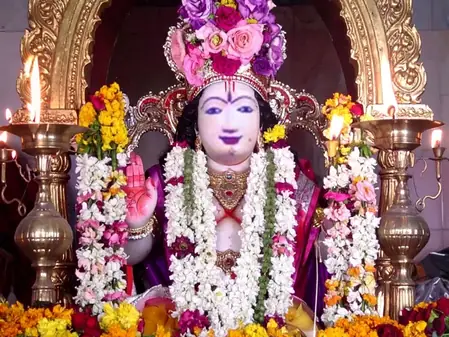
The Rajrajeshwari Temple in Nellore, Andhra Pradesh, shines as a pinnacle of Hindu spirituality, honoring a goddess of Tantra within the ten Mahavidyas. Unlike South India’s fiery Shakti forms, she exudes tranquil beauty and ecstasy, luring devotees for profound esoteric rites.
Boasting 51 yantras in its inner sanctum—symbols of wish-granting might—it rivals the famed 51 Shakti Peethas. Tantric sadhaks perform meticulous pujas, yagnas, and havans to beseech Rajrajeshwari, synonymous with Shodashi and Lalita.
Her mesmerizing murti rests on the Meru Yantra, brandishing shankha, chakra, and bow, with Saraswati rightward and Lakshmi leftward. Celestial Navagrahas grace the walls, infusing rituals with astrological potency.
For Rahu-afflicted horoscopes, the 18-week Rahu Kaal Deepam ritual reigns supreme: daily ghee-lemon lamps, Chandi fire offerings, and pradakshina. Transformations abound, as devotees shed longstanding curses.
Dashahara elevates the temple to festive heights, with 24-hour worship and exuberant melas saluting her demon-vanquishing prowess—the very essence of the festival.
Its lore begins with Arul Jyoti Nagraj’s divine encounter in Durgamitta’s fields while traveling to Vijayawada. Heeding the call, local followers built the shrine, later expanding with temples to Subrahmanyeshwar, Sundareswar, Gayatri Devi, and Vinayaka.
This sacred enclave dismantles Tantric adversities and planetary pitfalls, fostering abundance and serenity. Rajrajeshwari’s domain remains a vital spiritual lifeline.