

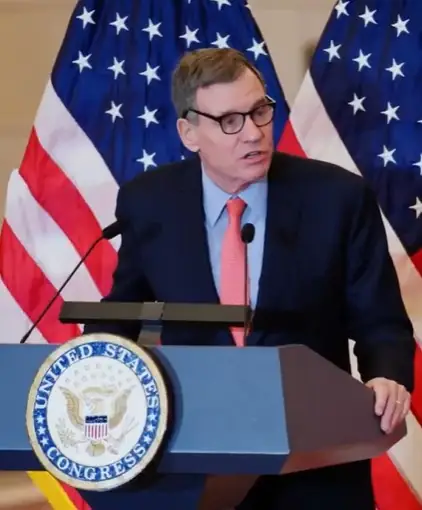
From Capitol Hill, a leading US legislator has flagged escalating doubts over Bangladesh’s general elections, pinning blame on Washington’s disengagement. Mark Warner, head of the Senate Intelligence panel, shared in an interview that fading American support is eroding democratic foundations, imperiling stability and impacting India’s border security calculus.
Lacking clarity on the elections’ legitimacy set for February 12, Warner lamented the on-ground influence deficit. He traced it to the Trump administration’s withdrawal from aid and growth programs in the Global South, which gutted the soft power that sustained partnerships.
Muhammad Yunus’s short-lived caretaker stint had fueled aspirations for transformation, particularly empowering disenfranchised youth. That momentum stalled, breeding governance hurdles. Warner speculated on backlash linked to the ex-premier’s haven in India, challenging cross-border peace, though he anticipates free polls.
The country battles poverty, monetary squeezes, and environmental hazards. Addressing radicalism, Warner noted its marginal presence, urging measured responses to isolated flare-ups.
India confronts a menacing periphery with Bangladesh, Myanmar, and Pakistan posing hazards to order. Warner underscored America’s holistic power base, including long-haul investments in development and democracy via soft levers.
Aid cutbacks have weakened sway in transitional hotspots like Bangladesh. He pressed for unbroken global ties to sustain institutions. Tied to South Asian rivalries, Bangladesh’s drama invites neighborly and worldwide gaze.
Proximity renders Bangladesh’s fate integral to India—via elongated boundaries, trade vibrancy, eastern fluxes, and defense synergies. Election outcomes will shape the subcontinent’s trajectory profoundly.