

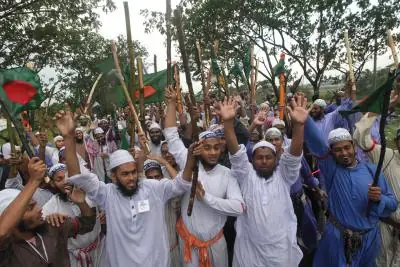
Bangladesh gears up for its February 12 elections amid a surge in faith-laced politicking. Parties boldly frame dissent as anti-Islamic, per a recent analysis—a familiar gambit to paint challengers as heretics when support falters.
The fallout is visible everywhere: faith-driven halts to music schooling, assaults on holy sites, menacing calls against theater, and doctored textbooks. Columnist Hasan Firdous in Prothom Alo unmasks the pattern, tying it to religion’s role in the 1971 Pakistani genocide of locals.
He laments the escalated abuse for votes. Religiously named outfits thrive, and upon gaining power, minorities bear the brunt—mirroring Pakistani Ahmadis’ exclusion or Shia shrine carnage. Locally, social media slights ignite pogroms against minorities at an alarming rate.
A political faction’s pitch to trim women’s shifts to five hours daily is pitched as visionary, yet it’s a ploy to erode their workforce role and enforce domesticity. Hardliner Jamaat-e-Islami toggles messages: no Sharia vows for convenience, countered by overt endorsements on airwaves and foot soldiers urging votes for their scales as pious imperative, even ‘jannat’s entry ticket.’
This schism highlights Bangladesh’s dilemma. Religion’s politicization risks fracturing its fragile harmony, challenging the secular republic’s core. Come election day, the nation confronts whether faith will unite or divide its future.