

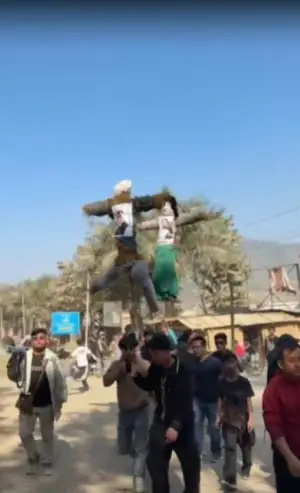
Daily routines shattered across Churachandpur as Kuki-Zo tribal alliances enforced a stringent bandh Friday, protesting their MLAs’ involvement in Manipur’s new coalition government. The 24-hour action emptied streets, closed businesses, and suspended all public activity in the sensitive hill district.
Backed by KSO, JF7, and human rights forums, the shutdown underscored profound divisions within the community. Rallies drew huge crowds chanting against BJP’s Nemcha Kipgen, now Deputy Chief Minister, and her peers L.M. Khaute and Ngursangluur Sanate.
Preceding unrest peaked Thursday with fiery clashes. Youth-led groups ignited barricades and pelted stones, provoking a robust police response involving lathicharges and tear gas deployment. At least five sustained injuries in the melee at Tuibong and nearby spots.
The trio’s participation—virtual assembly attendance included—has isolated them, with the apex Kuki-Zo Council imposing social sanctions. Seven of ten community MLAs are BJP associates, heightening stakes in the violence-scarred state.
Governor Anusuiya Uikey and CM Singh addressed the assembly, prioritizing law enforcement and collaborative peace-building. Massive security reinforcements now blanket the hills, monitoring fragile calm after overnight skirmishes.
As protests echo in adjacent districts, Manipur navigates a delicate balance, where political inclusions risk reigniting old wounds in its diverse ethnic landscape.