


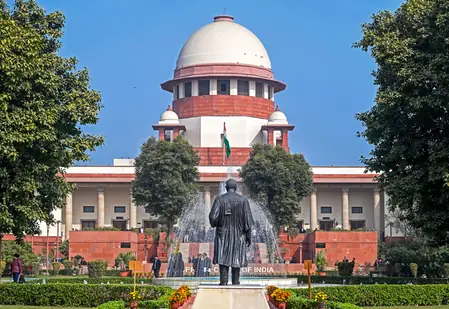
Supreme Court proceedings on the Air India Flight AI-171 tragedy saw the government awarded three weeks extra to finalize its inquiry. Justice Suryakant’s bench, in a key directive, ordered the report’s sealed submission, scheduling the subsequent hearing accordingly. Families and experts watch closely as answers loom.
June 12, 2025, etched sorrow in Ahmedabad: The London-bound Boeing 787-8, AI-171, faltered 32 seconds post-takeoff, colliding with a medical hostel. Captain Sumit Sabharwal (56) and 240 passengers/crew met fate with 19 innocents below—260 lives extinguished. Core issue: abrupt fuel cutoff to engines, erasing thrust.
Legal recourse began with a plea from the pilot’s 91-year-old father, Pushkar Raj Sabharwal, insisting on impartial, court-led probe, supported by Indian Pilots’ Federation. Solicitor General Tushar Mehta conveyed near-finalization, stalled by international lab verifications.
Counsel Prashant Bhushan spotlighted recurring Boeing 787 fuel switch woes in three cases, channeling 8,000 pilots’ demand to suspend operations. A current London-Delhi flight glitch saw Air India act decisively, though regulators deemed it faultless.
Referencing Boeing 737 Max cover-ups—initial pilot vilification overturned by defect revelations—Gopal Shankar Narayanan reinforced arguments. Justice Suryakant acknowledged fresh fuel switch reports, warning against precipitous airline indictments amid official normalcy claims.
The extension bridges to potential breakthroughs in black box decodes and debris forensics. Beyond grief, it spotlights imperative safety evolutions, possibly catalyzing fleet-wide checks and policy overhauls in India’s bustling aviation sector.