


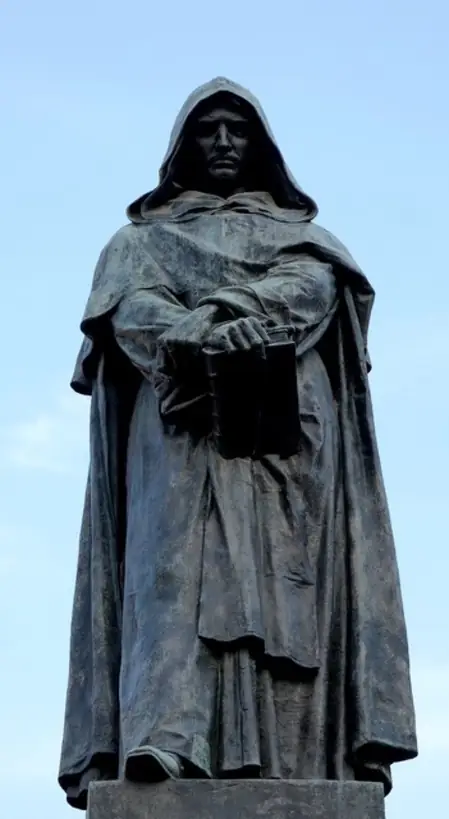
Tyrants of faith and state alike dread the spark of unbridled curiosity. Giordano Bruno lit such a fire, paying with his life in Renaissance Rome. Born 1548 in Italy’s Nola, the monk-turned-maverick embraced Copernicus, then soared further: infinity as the universe’s essence, myriad suns with planetary kin, life beyond Earth. Pantheism crowned his creed—God as universal soul, known via intellect.
The Inquisition pounced in 1592, hauling him to Rome for a protracted ordeal. Despite torments, Bruno stood firm, scorning recantation. On February 17, 1600, Campo de’ Fiori witnessed his public torching, tongue silenced by gag to mute final words.
Redemption came slowly. By the 1800s, admirers raised his statue there, transforming infamy into honor. Bruno now symbolizes the scientific revolution’s dawn, his infinite vision echoing in Hubble’s gaze and exoplanet hunts. His tragedy reveals power’s fragility before truth-seekers, a call to nurture intellectual liberty lest history repeat its pyres.