


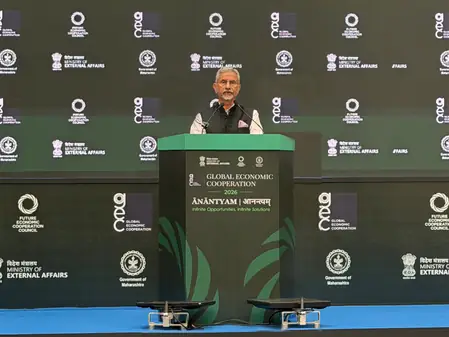
The Global Economic Cooperation Summit opened in Mumbai on February 17 with External Affairs Minister S. Jaishankar setting a tone of cautious optimism. Over the next three days until February 19, policymakers from developed and emerging economies will dissect trade strategies, investment trends, and geo-economic realignments.
Supported by the Future Economic Cooperation Council (FECC) alongside India’s External Affairs Ministry and Maharashtra state, the forum highlights India’s strategic diplomacy. From the inauguration with CM Devendra Fadnavis, Jaishankar shared on X India’s pledge to fortify itself through turbulent times.
He praised the administration’s agile, results-driven, and people-oriented framework: ‘These policies render India a steadfast collaborator on the world stage.’ Bolstered by such measures, India is advancing economically and nurturing key partnerships, as recent trade accords demonstrate.
Jaishankar urged vigilance on worldwide upheavals: ‘The established global system is palpably evolving. Forging an alternative is arduous; rather, shadows of doubt loom—replete with perils, unpredictability, and dangers we’ve encountered before.’
Coexistence of fading and rising paradigms awaits, he observed, with elections tilting focus toward political and security realms over economic ones. AI’s era promises revolutionary shifts.
India counters by amplifying capabilities, confronting expansion barriers, and juggling proximate threats with distant horizons. ‘Reform acceleration endures, reverberating across supply-demand axes,’ he emphasized. This robust foundation fosters profound engagements, positioning India centrally in worldwide discourses on industry, services, innovation, expertise, and human capital.
Through summit dialogues, Jaishankar’s remarks chart a course for India’s influential role in an era of flux.