


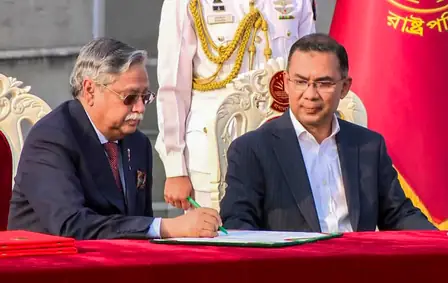
Tensions simmer in Dhaka as President Mohammed Shahabuddin accuses Muhammad Yunus’s interim government of grave constitutional violations and personal vendettas. In an exclusive Kaler Kantho sit-down at Bangabhaban, he chronicled efforts to sideline and supplant him unconstitutionally.
Over the 1.5-year stint, Shahabuddin endured exclusion from key talks, loss of his press apparatus, and schemes to foment chaos and presidential vacancy. His unyielding stance foiled multiple removal bids, though the ordeal tested his limits.
Central to his grievances: Yunus’s failure to debrief after numerous international visits, ignoring mandates for written reports on dialogues and deals. Major moves like 133 ordinances and the undisclosed US agreement evaded presidential knowledge entirely.
International outings to Kosovo and Qatar were scuttled, leaving him clueless amid state affairs—a sharp contrast to predecessors’ transparency. ‘They neither met me nor shared documents,’ he charged.
Shahabuddin’s forthright narrative lays bare interim power abuses, fueling debates on governance lapses. For Bangladesh, still healing from upheaval, it signals a call for constitutional reverence and transparent leadership in uncertain times.