


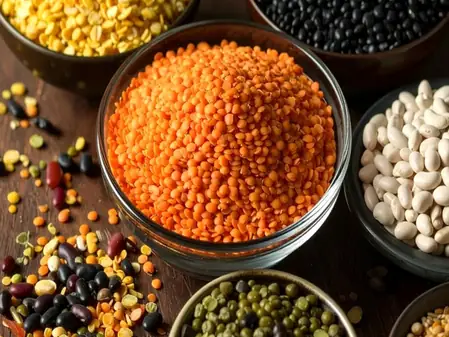
From ancient texts to modern plates, Ayurveda’s take on lentils emphasizes their therapeutic edge. Varieties like moong, masoor, urad, arhar, chana, rajma, kabuli and kala chana, plus dried peas, each carry distinct potencies. Here’s a comprehensive look at their roles in wellness and precautions to heed.
Light-as-air moong dal cools acidity, supports diabetic control, PCOS relief, thyroid balance, and feeble guts. Nightly winter servings risk kapha buildup and sniffles.
Masoor dal’s fire stokes metabolism for fat burn and liver cleanse, nurturing warmth. Banned for arthritics, pile sufferers, digestion laggards, kidney patients.
Flavorful arhar banishes fatigue with wholesome punch—sparingly spiced for evening acidity avoidance.
Appetite-suppressing chana dal suits sugar-watchers; daytime only for digestion-challenged.
Joint-empowering urad dal fights weakness, shunned by the obese, phlegmy, feverish, or acid-refluxed.
Fiber-protein star rajma boosts health broadly, minus for gassy guts, IBS, thyroid, dieters.
Muscle-maker kabuli chana shines, tempered in constipation, heartburn, PCOS scenarios.
Iron-rich kala chana amps stamina—minimal for gas, swelling, joint distress.
Energy-packed dried peas thrive protein delivery, limited in coughs, mucus, flatulence, gut frailty.
Embrace lentils wisely to leverage Ayurveda’s holistic nutrition, fostering enduring health harmony.