


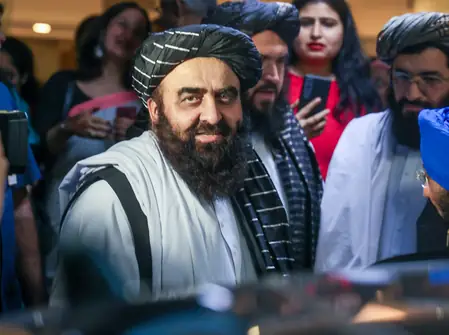
A high-stakes phone call between Afghan Foreign Minister Amir Khan Muttaqi and his Qatari counterpart, State Minister Mohammed bin Abdulaziz Al-Khulaifi, has spotlighted Kabul’s firm response to sovereignty challenges from Pakistan. Muttaqi made it unambiguous: while dialogue remains the preferred path, Afghanistan is equipped to retaliate against territorial aggressions.
The ministry elaborated that the exchange covered regional flashpoints, zeroing in on clashes between the Islamic Emirate’s defenses and Pakistani troops. Recent maneuvers, Muttaqi noted, were precision strikes to secure Afghan skies and borders, fully accomplishing their defensive mandate.
Afghanistan’s long-standing policy shuns provocation, favoring respectful negotiations, but insists on counterparts’ authentic commitment. This position reflects ongoing disputes over border security, where Kabul accuses Islamabad of repeated provocations, prompting necessary countermeasures.
Qatar advocated for foundational fixes to the bilateral rift, vowing to collaborate internationally for conflict management. The call ended with pledges for unbroken advisory lines, highlighting diplomacy’s frontline role.
Geopolitically, Qatar’s involvement amplifies its status as a key player in Taliban-era Afghanistan, bridging divides between conservative regimes and global actors. This dialogue not only diffuses immediate pressures but also sets precedents for handling similar crises. For the Islamic Emirate, balancing military readiness with diplomatic outreach is key to survival and growth in a hostile landscape.