


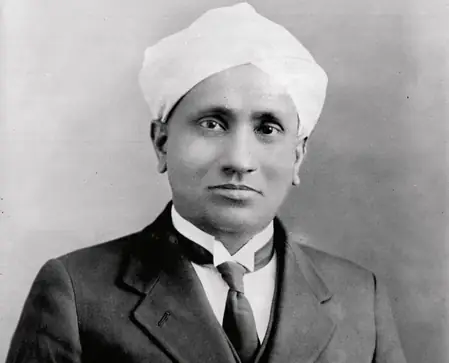
Celebrating National Science Day, we revisit C.V. Raman’s Raman Effect – a photon revelation that shattered barriers and clinched India’s inaugural Nobel in science. Declared in 1986, February 28 honors the 1928 lab breakthrough.
The son of a lecturer born in 1888 Tamil Nadu, Raman pondered light’s quirks amid scarcity. A 1907 civil service role in Kolkata sustained him till 1917, when he embraced teaching at Calcutta University and IACS experiments.
Instrument-starved, he sought 22,000 rupees from rising star G.D. Birla for a vital spectrometer import, vowing Nobel success. Funded, Raman proved light scatters with altered color and energy through transparent media.
Asia’s first Physics Nobel arrived in 1930. Echoing India’s storied contributions – Arabic numerals, Damascus steel – Raman modernized the narrative.
Nationwide, planetariums host light demos, universities debate quantum scattering, and startups showcase Raman tech in diamonds, pharma. His persistence narrative inspires amid India’s rising R&D investments.
Raman showed visionaries thrive on trust. Today, his effect powers spectroscopy revolutions, from cancer detection to planetary probes, eternally scattering knowledge.