


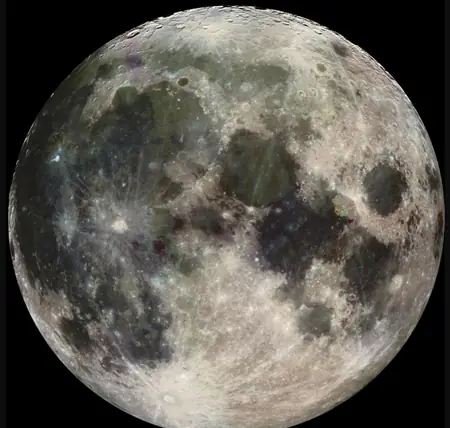
Why does the moon transform into a behemoth at horizon’s edge, painted in sunset shades? This visual wizardry baffles skywatchers worldwide, but experts unravel it as masterful mind magic, not cosmic expansion.
Angular diameter stays fixed at half a degree – horizon or heavens. The ruse originates in cerebral interpretation, not celestial mechanics.
Surrounding vistas supply deceptive depth cues. Brains, trained on terrestrial scales, inflate the moon to match imagined remoteness. Isolate it optically, and normalcy returns; cameras corroborate without fail.
Subtle compression from atmospheric lensing occurs low-down, but enlargement? Pure fiction. Photogs leverage telephoto tricks for epic frames, fooling the frame not the fact.
Color shift traces to ray paths: thicker air at low angles disperses vivid blues, ushering warm tones through. Pollutants deepen the blaze.
Hypotheses spotlight Emert’s distance-size link and Ponzo-style line convergences from landscapes. Astronaut accounts defy earthly context theories, implicating instinctive visual architectures or hemispheric sky illusions.
Uncracked after millennia, it underscores perception’s fragility. Arm yourself with simple tests, capture the evidence, and reclaim the night sky’s truths from illusion’s grasp.