


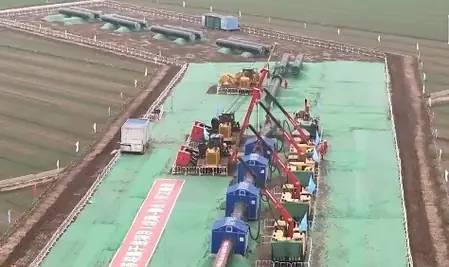
Beijing buzzed with activity on February 28 as China greenlit three cornerstone natural gas pipeline projects. The Jiangsu-Anhui-Henan trunk line takes center stage—the pioneering national effort in the 15th Five-Year Plan for oil and gas, embodying the next frontier in unified gas infrastructure.
In tandem, Anhui’s Wen 23-Anqing line and Shandong’s North Trunk Pipeline broke ground amid fanfare. Surpassing 30 billion yuan in collective investment, they target transformative upgrades in central-eastern network robustness and reach.
Why does this matter? Gas demand in China has skyrocketed, outpacing current capacities. These projects will interlace regional lines into a cohesive national system, slashing bottlenecks and enhancing efficiency. Benefits ripple to households with steadier pricing and industries with uninterrupted fuel.
Strategically, it’s a masterstroke for security. By densifying the grid, China mitigates risks from geopolitical tensions or weather events. Environmentally, it accelerates the shift from dirtier fuels, aiding air quality and climate targets.
The road ahead brims with potential. Advanced materials, smart monitoring tech, and phased rollouts ensure durability. This initiative not only fuels growth today but secures tomorrow’s energy needs, cementing China’s leadership in global infrastructure.