


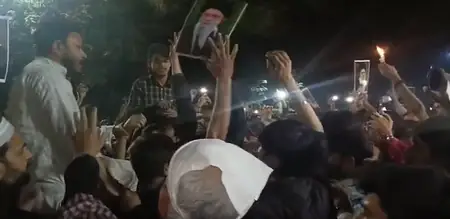
Aligarh’s prestigious Aligarh Muslim University transformed into a protest arena on March 2, as students and locals united in outrage over Ayatollah Ali Khamenei’s death in a purported Israel-US operation. The demonstrations pulsed with raw emotion, capturing a nation’s shared grief amid geopolitical strife.
A protester with deep ties to Iran—nine years of residence—explained, ‘We mobilized at noon and reconvened after dark. Our protests will endure.’ To the attackers, his words rang clear: ‘Iran endures your blows and strikes back harder. Khamenei’s legacy of resistance lives on.’
Described by peers as a paragon of moral leadership, Khamenei’s passing galvanized the crowd into fervent tributes. This mirrors escalating protests nationwide, weaving local anguish into the fabric of international discord.
Lucknow set the precedent, with massive street gatherings in the heritage quarter. Traders committed to three-day closures, sealing off the majestic Bara Imambara too. Influential Shia figure Maulana Syed Kalbe Jawad exhorted all humane souls to pause trade in solidarity.
Grief manifested boldly: somber black flags, Khamenei portraits on imambaras, and defiant placement of Israel-US flags underfoot at Chhota Imambara.
These vivid scenes illuminate simmering tensions, potentially reshaping perceptions of global powers in India. With security forces on alert, the focus shifts to channeling dissent constructively while addressing root causes of such widespread fury.