


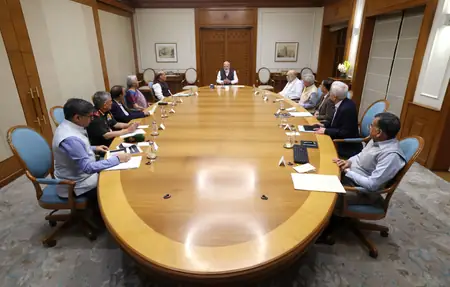
Dark clouds over West Asia prompted urgent action in New Delhi. On February 28 evening, PM Narendra Modi led the Cabinet Committee on Security (CCS) in a thorough appraisal of escalating hostilities, ignited by airstrikes targeting Iran and spilling into Gulf domains.
The session unpacked the sequence of assaults fueling the firestorm, with acute focus on perils to India’s expatriate legions. Attentions spanned travel snarls for Indian flyers, academic disruptions for students, and seismic shocks to regional defense, trade flows, and financial arteries.
In resolute terms, the CCS instructed a full-spectrum response from ministries: implement all feasible interventions to succor affected nationals, prioritizing rescues, advisories, and sustainment. Emphasis was laid on expediting peace through talks and tact, averting deeper entanglements.
Diplomacy kicked into high gear with PM Modi’s call to Israeli leader Benjamin Netanyahu, articulating India’s stance on perils, citizen primacy, and de-escalation urgency. His prior outreach to UAE’s Sheikh Mohamed bin Zayed conveyed grief over losses, solidarity pledges, gratitude for Indian community care, and endorsement of stability pursuits.
These moves paint India as a vigilant guardian of its overseas kin, wielding security resolve alongside persuasive global dialogue to navigate the Middle East maelstrom.