


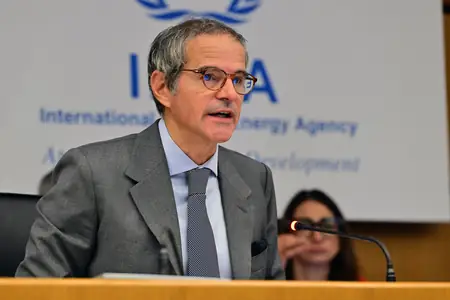
Tensions grip the Middle East, but the UN atomic agency reports Iran’s nuclear heartland has dodged direct calamity from US and Israeli air assaults.
In Vienna, IAEA Director General Rafael Grossi opened proceedings of the Board of Governors’ Iran-focused session with reassuring data. No anomalies detected at Bushehr Nuclear Power Plant, Tehran Research Reactor, or fuel facilities. Border radiation monitors confirm normalcy, easing short-term panic.
The catch? A total blackout from Iranian regulators. War’s fury has muted responses to IAEA queries, prompting relentless follow-ups.
Grossi issued a stark advisory: tampering with nuclear infrastructure invites radioactive havoc, demanding city-wide evacuations and humanitarian nightmares.
The regional powder keg – fueled by Israeli-US strikes and Iranian missile ripostes – demands de-escalation, he insisted. ‘Maximum restraint from everyone; military action must yield to diplomacy at once.’
As the IAEA battles this ‘communication gap,’ the global community braces. Preventing nuclear fallout hinges on restoring dialogue swiftly in this high-stakes standoff.