


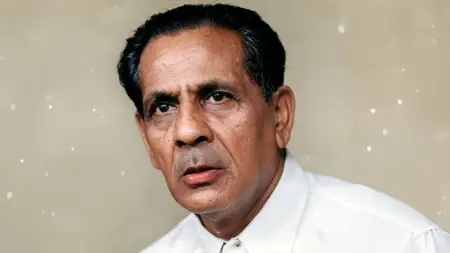
The enigmatic Firaq Gorakhpuri, born Raghupati Sahay, was a whirlwind of contradictions—a civil servant turned revolutionary, a lover scarred by loss, and a philosopher whose Urdu verses echoed the Bhagavad Gita’s timeless truths. His life (1896-1982) pulsates through poetry that marries heartache, devotion, and existential insight.
From 1918 to 1930, Firaq unleashed a creative torrent: countless ghazals, rubaiyat, nazms injecting Urdu with vital themes of emotion, nationhood, morality, and scenic splendor. His emerging pathos became poetry’s new heartbeat.
Activism defined him equally. Resigning from British service amid Non-Cooperation, he embraced Civil Disobedience, landing in Agra for 15 months. Jail mushairas immortalized his sher on the indomitable ‘gathering of the living.’ Congress roles under Nehru amplified his influence.
A decade-long infatuation from 1918 birthed shers of profound yearning, elevating lust through soulful intensity. Family tragedies—paternal loss in Dehradun, brothers’ deaths—yielded nazms fusing morning’s glow with abyssal sorrow.
Enraptured by Gita, ‘Nagm-e-Haqiqat’ poetically translates Krishna-Arjuna’s dialogue: universe as God’s radiance, embodying epics’ heroism and sacrifices.
1924 brought a vatan-loving ghazal in Allahabad’s quiet night, embodying anti-colonial passion.
Accolades befitted his stature: Sahitya Akademi, Padma Bhushan, Jnanpith for ‘Gul-e-Naghma.’ Firaq exemplifies multifaceted brilliance—where personal torment fuels national anthems and spiritual epiphanies. In an era craving depth, his shayari remains profoundly relevant, a mirror to human complexity.