


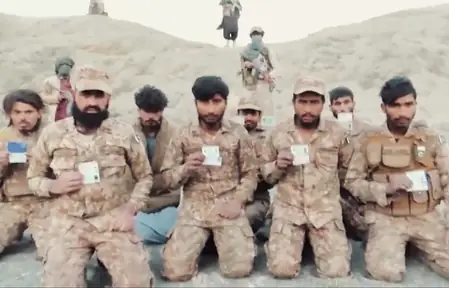
The Baloch Liberation Army (BLA) dropped a bombshell from Balochistan’s shadows: seven Pakistani military captives lie dead, executed on orders from its senior command after a tribunal’s guilty call on war crimes. This act caps a saga of failed diplomacy in the volatile ‘Operation Herof 2.0’ theater.
The BLA’s statement lays bare the charges—enforced vanishings, public cruelties, and battlefield horrors—leveled by its Baloch National Court against army regulars. Post-capture in February, a swap ultimatum stretched from seven to 14 days, only for Pakistan to allegedly counter with drone strikes and troop surges, mocking the gesture.
Concluding negotiations futile, the council greenlit the penalties Tuesday, pinning accountability on Islamabad’s generals for prioritizing aggression over rescue.
Echoing the operation’s scope, the BLA chronicled a marathon 10-hour offensive spanning Quetta to Kalat, felling 84 foes, netting 18, razing offices, banks, jails, and torching vehicles. Temporary strongholds and blocked routes showcased tactical prowess in government strongholds.
Spokesman Jiyand Baloch hails it as a milestone against tyranny, amplifying Baloch voices long ignored. The executions serve as a stark warning: concessions invite betrayal.
Islamabad confronts a hydra-headed threat, as BLA gains ground in sentiment and strikes. With CPEC projects in crosshairs, economic ripples loom large. Global watchdogs decry the cycle—abuses breeding insurgency—pleading for mediated talks. Yet in Balochistan’s rugged expanse, bullets speak louder than words, foretelling more blood.