


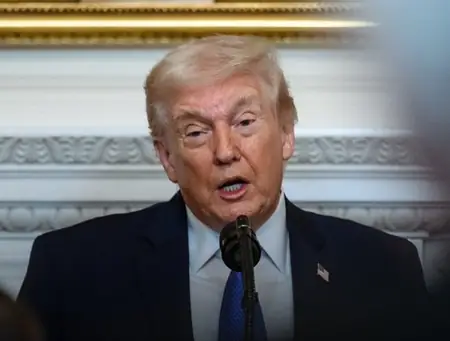
Amid White House talks with German Chancellor Friedrich Merz, US President Donald Trump articulated a clear red line for Iran: no exchanging one radical regime for another. He spotlighted Reza Pahlavi, the exiled Crown Prince, as a possible architect of Iran’s renewal if current leaders fall.
Trump detailed the US strategy of systematically weakening Iran’s war machine, but warned of the pitfalls in the power vacuum. ‘The worst is doing everything right, then watching an equally terrible leader emerge,’ he cautioned, advocating for a people-centric government.
On Pahlavi’s prospects, Trump remained pragmatic. ‘Possible. Some like him a lot, but we haven’t delved deep,’ he replied, while favoring a homegrown alternative with grassroots support for smoother transition.
Military updates were grim for Tehran, per Trump: key figures eliminated, structures crumbling under relentless assaults. ‘Attacks are hitting leadership hard. Soon, we might not know who’s left standing,’ he predicted.
Merz reinforced alliance solidarity, noting shared resolve to dismantle the regime and map the future. ‘We’re aligned on removal and the morning after,’ he stated, calling for joint European-American initiatives amid soaring regional strains from escalated strikes.
This pivotal dialogue underscores Washington’s forward-thinking amid conflict, merging kinetic operations with geopolitical foresight to secure a stable, democratic Iran.