


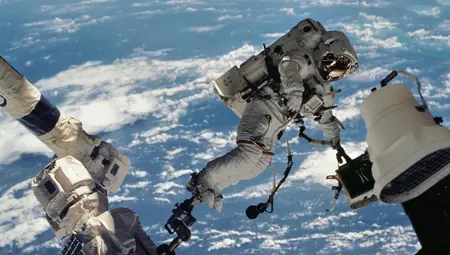
Fifty years of NASA’s Human Research Program illuminate space’s toll on the human frame, fueling advancements in protection gear, vessels, wellness programs, sustenance, and psyche prep. As low-orbit hops give way to lunar landings and Mars shots under Artemis, grasping prolonged effects is paramount.
The program targets peak astronaut vitality and data haul for moon missions, scrutinizing endurance in ultra-long flights. Extended ISS tenures by astronauts like Scott Kelly and Christina Koch—twice the standard—delivered pivotal data on bodily and cognitive evolutions.
NASA tags the quintet of threats as RIDGE: Radiation, Isolation/Confinement, Distance, Gravity Fields, Hostile Environments. Radiation dominates; planetary defenses falter in the void.
Threats stem from magnetosphere-trapped particles, solar energetic bursts, and galactic cosmic rays—the toughest to shield. Sustained doses spike cancer, heart disease, cataracts risks; space variants outmatch Earth radiation in toxicity per studies.
Moon-Mars epics eclipse ISS durations, ballooning exposures and hazards. Responses: precision radiation detectors, robust shields, instant monitoring, tailored procedures. Varying risk profiles across mission lengths sharpen deep-space readiness.
This framework equips explorers for victory over vacuum’s vices, securing humanity’s cosmic expansion.