


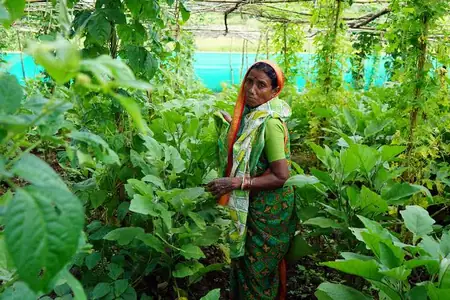
Empowerment blooms in Madhya Pradesh’s Mandla as agroecological homesteads redefine tribal agriculture. A compelling report details how CGIAR and PRADAN’s project has supercharged production, nutrition, and women’s earnings by revitalizing backyard spaces.
Key strategies include altitude-adapted veggie diversity, sequential cropping, bio-compost creation, rainwater storage, and symbiotic livestock integration via residues. Outcomes? A 350% production diversity leap, twice the food types consumed, 70% greener veggie intake, per IWMI.
Poultry boosts proteins and savings; market reliance for yields and manure plummets. Bold women farmers now dictate family farm dynamics, defying conventions.
Flashback: Chimkatola and Kelhri farmers clung to maize monocrops up high, rice down low. Backyards idled, yields faltered under rain failures, soil loss on inclines, volatile fuels, and price fluxes—per PRADAN’s Saurabh Kumar.
Transformation via 400-500 sqm organic plots using Jeevamrut and Panchagavya from cow dung/urine blends. Kusum of Chimkatola says, ‘No more market shopping; we grow it all.’
Beyond numbers, this heralds a sustainable future: healthier families, empowered women, eco-friendly farming. It’s a testament to innovative, community-led solutions tackling India’s rural challenges head-on.