


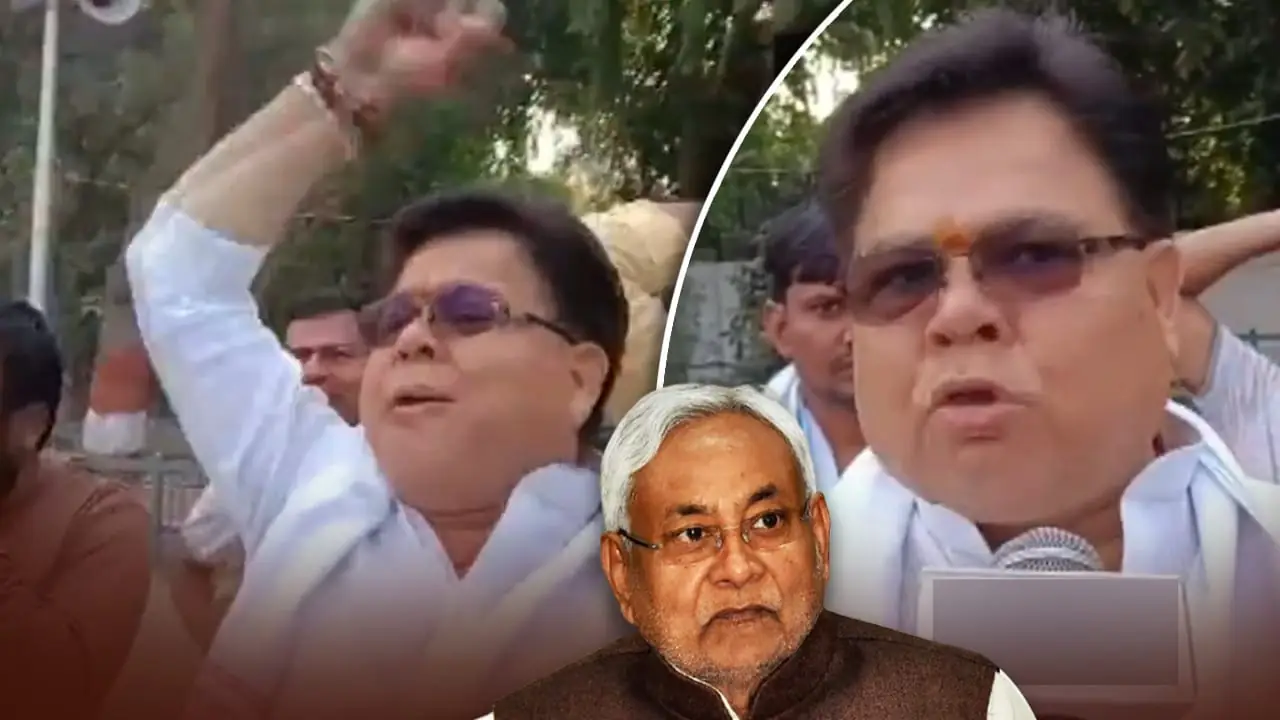
A wave of unrest swept through Patna as JDU’s foot soldiers mobilized in force against whispers of Chief Minister Nitish Kumar’s potential Rajya Sabha move. Outside his residence, the air thrummed with chants insisting on elections as the sole path to any power shuffle.
Leading the charge was Rajiv Ranjan Patel, whose fiery address galvanized hundreds. He recounted the party’s sacrifices: ‘Holi was ruined by this news. We sweated for Nitish’s CM tenure, not a premature exit.’ Accusations flew at central influencers allegedly plotting the shift, igniting cadre fury.
Timing coincided with Nishant Kumar’s entry into JDU fold, scheduled at party office with Sanjay Jha presiding. This family succession angle fueled debates, even as protesters vowed unyielding support for the patriarch.
Patel’s rhetoric cut deep: ‘Prevent Nitish from nominating? Absolutely. Bihar’s mandate runs to 2030. Want a new face? Earn it via votes.’ Inbound calls from distraught women and workers highlighted the emotional toll, with many decrying the lack of grassroots input on such seismic decisions.
In counterpoint, Sanjay Singh urged respect for Nitish’s autonomy: ‘As our top leader, his call stands. But Bihar yearns for him locally—leadership echoes this.’ The dual voices reflect a party at crossroads, balancing hierarchy with populist fervor.
This outburst arrives amid Bihar’s intricate alliance arithmetic, potentially complicating governance. Protesters’ ultimatum—polls or persistence—tests Nitish’s maneuvering room. As Nishant’s initiation nears, Patna pulses with uncertainty, poised for ripple effects across the state’s political theater.