


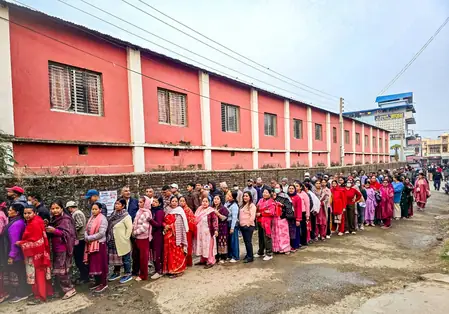
Thursday brought Nepal’s parliamentary elections to a serene close, yet preliminary turnout at around 60 percent paints a picture of public detachment—the nadir since 1991’s polls. Expectations soared for this Gen Z-era vote, but reality bit hard.
At the presser, Acting CEC Ram Prasad Bhandari projected the figure based on early inputs. Final tallies pending, it edges below 2022’s 61.41 percent. ‘Compilation continues; some centers are wrapping up queued votes,’ he detailed. Global and local watchers noted minimal disruptions.
Secure ballots head straight to scrutiny, choppers lifting from 15 remote zones. Of 18.9 million voters, dissent manifested in boycotts targeting the regime, sparing the Commission.
Roots lie in September’s Gen Z wave, toppling KP Sharma Oli. As head, he dissolved the assembly per youth mandates, fast-tracking elections. Strikingly, two-thirds-plus are Gen Z first-timers, auguring youth tides for 2026.
Races pit 3,406 FPTP warriors against 3,135 proportional players. This apathy amid peace prompts introspection: Will low engagement stall reforms in Nepal’s fractious politics?