


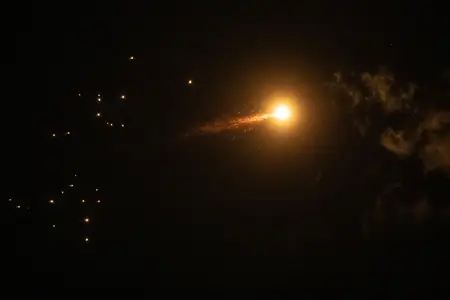
Escalating hostilities in West Asia have UAE air defenses working overtime against Iranian incursions, leading to a nationwide directive: no photos, no videos. This measure protects both security and public safety.
Ministry of Defense updates reveal successful intercepts of ballistic missiles and drones, explaining the explosive sounds rippling through cities. Fighter aircraft complement ground-based systems in a layered shield.
On X, officials detailed: “These noises stem from neutralizing airborne threats from Iran.” A proactive approach minimizes collateral damage in a high-stakes environment.
The Indian Embassy’s advisory zeroes in on its nationals, forbidding uploads of any conflict-related imagery. “Avoid airports, incident zones, and damaged sites—no exceptions,” it stipulates.
Practical tips abound: heed sirens by sheltering immediately, report suspicious items without touching, and comply to evade prosecution. This guidance aligns with UAE’s stringent laws on sensitive filming.
Contextually, Iran’s sustained campaign against US-Israel interests heightens regional peril. UAE, strategically positioned, absorbs stray threats while maintaining neutrality.
Impact on daily life is profound—schools, flights, routines disrupted. Yet, communal resolve shines, with most heeding calls.
Looking ahead, de-escalation seems distant. UAE’s multifaceted response—tech prowess, clear comms, behavioral nudges—sets a benchmark. In an era of instant sharing, restraint becomes the ultimate defense.