


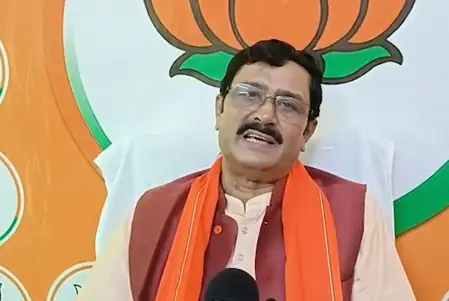
From the heart of West Midnapore on March 8, BJP firebrand Rahul Sinha unleashed a blistering critique of Mamata Banerjee’s leadership, urging the state’s tribal brethren to revolt against her rule. He portrayed a state on the brink, where public aspiration for President’s Rule looms large amid governance breakdowns.
Delays via incessant SIR issuances notwithstanding, Sinha forecasted an organic transition to President’s Rule upon term end, culminating in people’s elections. “TMC will hand-deliver what the masses seek,” he noted sardonically.
Triggering the storm was the venue fiasco at the 9th International Santhal Conference, interpreted as a grave protocol lapse insulting President Droupadi Murmu. Sinha decried it as anti-constitutional and anti-Bengali tradition. “Her tribal roots enabled this mistreatment; her retorts insult Adivasis outright. I beseech Bengal’s tribals: rally against this dishonor and uproot the culprits.”
The national spotlight intensified with Amit Shah’s condemnation of TMC’s lawlessness, which brazenly violates rights and targets even the President in a tribal context—exposing deep-seated corruption antithetical to democracy. PM Modi’s post mourned the unprecedented shame, voicing collective dismay over the tribal-origin President’s hurt.
As BJP leverages this to court Adivasi support, the discourse reveals fault lines in West Bengal’s polity: from administrative overreach to cultural slights. Sinha’s provocative summons could galvanize opposition forces, heralding turbulent times ahead in the battle for the state’s soul.