


February brought a mild uptick in India’s retail inflation to 3.21 percent from January’s 2.74 percent, as per Thursday’s release from the Ministry of Statistics and Programme Implementation. This upswing of 47 basis points reflects mixed signals from the market.
In rural regions, the rate hit 3.37 percent (from 2.73 percent), urban at 3.02 percent (from 2.75 percent). Food, the inflation bellwether, clocked 3.47 percent, with minimal rural-urban variance.
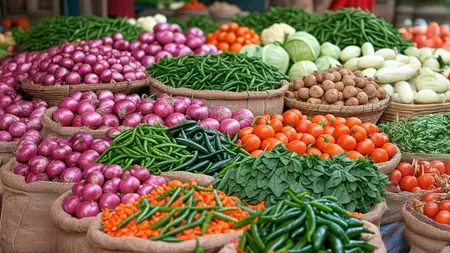
Consumers cheered sharp yearly price falls in garlic (-31.09 percent), onions (-28.20 percent), potatoes (-18.46 percent), arhar (-16 percent), and lychee (-11.52 percent), providing tangible relief at grocery stores.
Sharp rises countered this: silver jewelry +160.84 percent, gold/diamond/platinum +48.16 percent, copra +46.16 percent, tomatoes +45.29 percent, cauliflower +43.77 percent.
Detailed breakdowns show food & beverages at 3.35 percent, tobacco items 3.49 percent, clothes & shoes 2.81 percent, housing & energy 1.52 percent, education 3.33 percent.
High-inflation states over 5 million population: Telangana (5.02 percent), Rajasthan (3.53 percent), Kerala (3.50 percent), Andhra Pradesh (3.45 percent), West Bengal (3.44 percent).
Data reliability is top-notch, drawn from weekly visits to 1,407 urban markets and 1,465 villages by MOSPI’s field operations, ensuring 100 percent February coverage and 99+ percent price reporting.
Overall, while inflation remains manageable, the divergence in price movements—from bargain veggies to pricey jewels—highlights the need for targeted supply interventions to stabilize household costs long-term.