


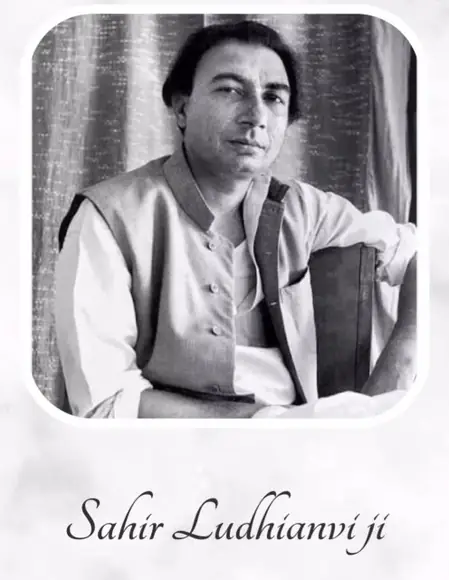
Coinciding with International Women’s Day, March 8 honors Sahir Ludhianvi’s birth, the lyricist who gave Hindi films their poetic heartbeat. From Punjab’s Ludhiana in 1921, Sahir’s verses tackled love’s agony, rebellion’s fire, and humanity’s core. His pinnacle? Words so potent they made playback titan Mohammed Rafi weep openly.
Composer Ravi’s interview spills the beans on Neel Kamal’s 1968 highlight: ‘Babul Ki Duayein Leti Ja.’ Rehearsal tears from Rafi shocked Ravi, who probed further. The singer confessed his daughter’s engagement mirrored the song’s vidai essence, blending art with life in a torrent of sentiment.
That heartfelt quiver defines the track, earning National Award glory. Rafi forwent a shaadi and payment to immortalize it – now inseparable from every bride’s poignant exit.
Sahir multitasked masterfully across genres. His Neel Kamal satire ‘Khali Dabba Khali Bottle’ (Manna Dey, Mehmood) quipped life’s voids: ‘Bara bara tan khali bottle… woh bhi aadhe khali.’ A clever unmasking of pretentious emptiness.
Unity pleas like ‘Tu Hindu banega na Musalman’ embodied his humanism. Ravi noted Sahir’s quirks: vanishing acts birthing perfection, selfless credit-sharing.
Sahir’s power to evoke real tears, as with Rafi, cements his eternal stature in Bollywood lore.