


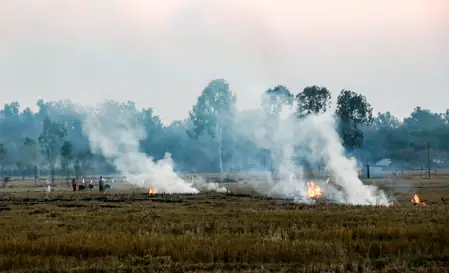
The battle against Delhi’s toxic winter air intensifies with CAQM’s landmark order. Punjab, Haryana, and Uttar Pradesh face strict instructions to obliterate wheat stubble burning in 2026’s harvest via robust, synchronized state plans.
Burning residues ravage NCR air quality, with 2025’s wheat season fires in NCR districts—flagged by ISRO protocols—highlighting the urgency for coordinated defenses.
After supplying a control framework and reviewing state plans in the December 22, 2025, 26th meeting and bilateral talks, CAQM insists on swift, improved deployment.
Map all village fields, categorize by interventions like crop rotation, site-specific management, external processing, or livestock feed. Appoint district nodes to supervise max 100 farmers, optimize CRM machines via apps, subsidize for tiny farms.
Guarantee storage, streamline ex-situ chains, devise district blueprints. Mobilize ‘Stubble Protection Forces’—inter-departmental squads—for monitoring, prevention, intensified dusk patrols. Enforce eco-fines, run massive education campaigns detailing dangers and superior practices.
Advisories extend to Delhi and Rajasthan for parallel action. Monthly CAQM reports ensure transparency and momentum toward pollution-free harvests.