


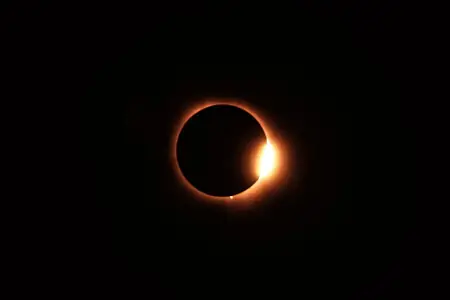
Get ready for 2026’s debut solar eclipse on February 17, coinciding with Dars Amavasya. This annular eclipse delivers the dramatic ‘ring of fire’ as the moon frames the sun incompletely. Indian stargazers draw the short straw – not visible anywhere in the nation.
Visibility hotspots: Antarctica dominant, plus South Africa, Zimbabwe, Zambia, Tanzania, Mauritius, South America segments. In IST, onset 3:26 PM, peak 5:42 PM, finale 7:57 PM. Tied to Aquarius/Dhanistha, it piques Vedic astrology followers.
Sutak? Skipped in India due to non-visibility; Drik Panchang rules confirm no pre-eclipse taboos on Feb 17. Engage freely in worship, ceremonies, everyday affairs. Panchang highlights: Amavasya ends 5:30 PM, Dhanistha till 9:16 PM (Shatabhisha next), moon Capricorn-bound.
Rise/set: Sun 6:58 AM-6:13 PM. Fortuitous windows – Abhijit 12:13-12:58 PM, Vijay 2:28-3:13 PM, Godhuli 6:10-6:36 PM, Amrit 10:39 AM-12:17 PM. Dodge pitfalls: Rahukaal 3:24-4:48 PM, Yamaganda 9:47-11:11 AM, Adal Yoga 9:16 AM-6:57 PM.
Antarctica basks in the full annular glory, ring ablaze across the continent and southern waters. Partial views grace South America, southern Africa, South Atlantic/Pacific, Antarctic peripheries. Blank slate for India, Sri Lanka, Nepal, Asia, Europe, most North America, central/northern Africa, Australia – purely a southern hemisphere extravaganza.