


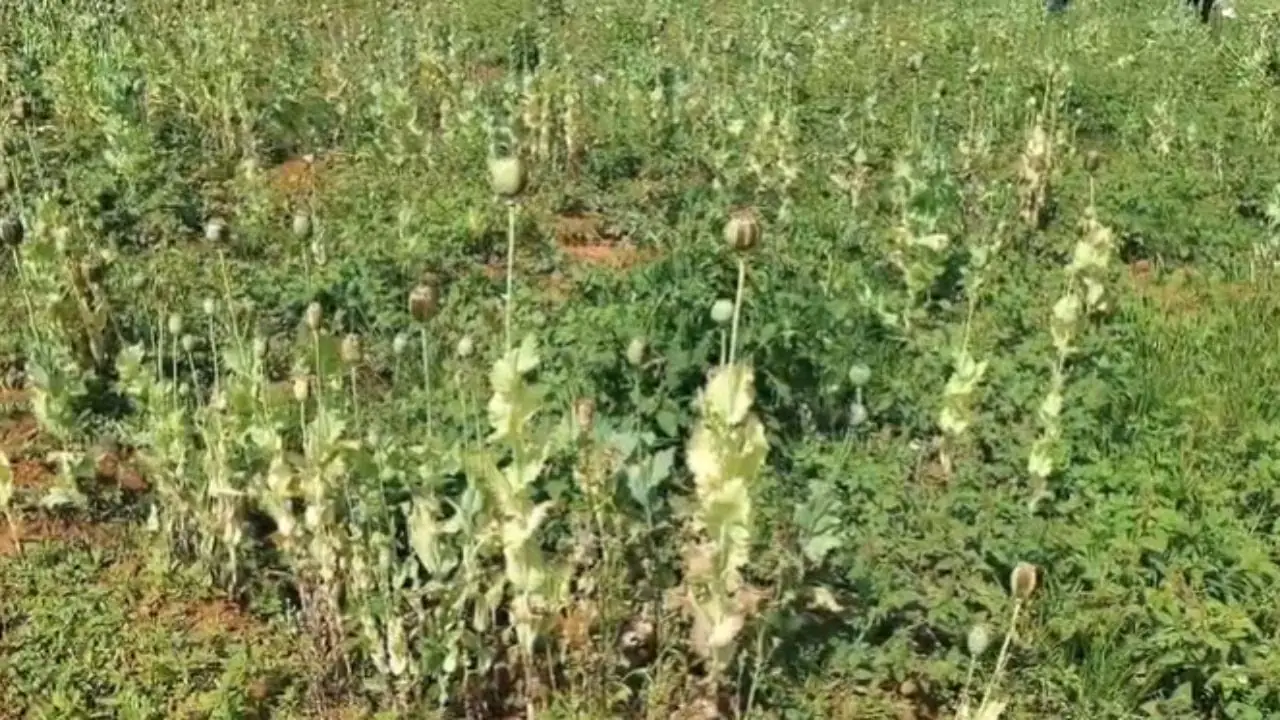
Chhattisgarh’s law enforcement has struck hard against illegal opium plantations in Durg and Balrampur, arresting key figures and destroying vast fields amid a burgeoning Jharkhand smuggling angle. The trio of cases has valued losses in crores, fueling national discourse on drug control.
Strictly legal in MP, Rajasthan, UP with central licenses for science and medicine, opium is taboo elsewhere. NDPS mandates 10-20 year sentences, fines to 2 lakhs, harsher for recidivists—in Chhattisgarh, zero tolerance prevails.
Initiating the crackdown, Durg’s Samoda raid on March 6 exposed 4-6 acres camouflaged in maize, bouncer-protected, pegged at 7-8 crores. Ruling BJP’s Vinayak Tamrakar orchestrated it; expelled and arrested with accomplices, the site was bulldozed. Congress stormed the legislature, ex-CM Baghel decrying BJP’s alleged narco-patronage.
Balrampur’s Kusmi uncovered 2-3 acres of incised poppies from a Jharkhand ‘flower’ ruse, jailing five including the owner. Chandadandi added 9 acres tied to fugitive Jharkhand businessmen; investigations fan out.
By comparison, MP’s Malwa hubs—Mandsaur trio— and Rajasthan’s Jhalawar zones operate under CBN’s Gwalior aegis: licensed, government-bound yields only.
Unveiling interstate rackets, these events demand robust measures to safeguard Chhattisgarh from becoming a narcotics hotspot.