


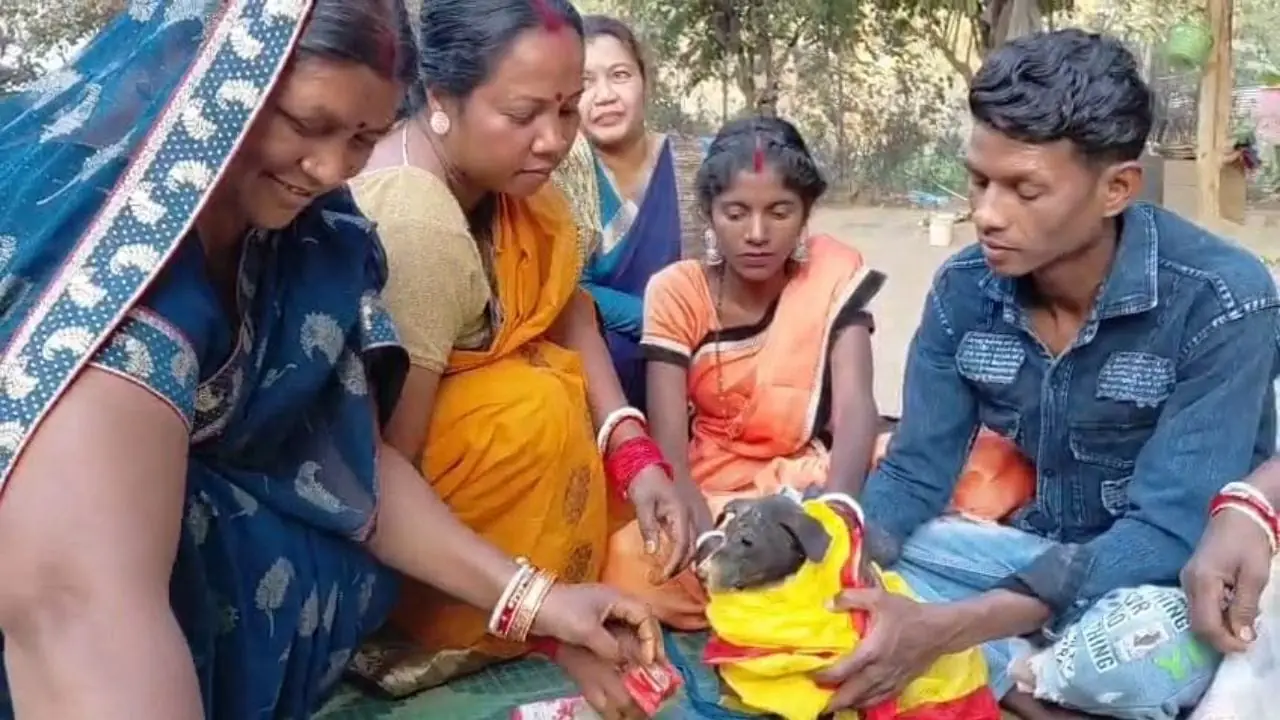
Amid Jamshedpur’s urban sprawl, a tribal ceremony defied logic: two children wed a bitch symbolically to dodge a dental curse. Tied to upper teeth emerging first, the rite unfolded in Shakosain on Harmangeya, capping the Mange Parab festivities.
Ho tribe faithfuls hold that this quirk foretells disaster. Their fix—a dog matrimony ritual—purportedly exorcises the hex, bestowing lifelong protection. It’s a conviction handed down through oral histories in Jharkhand’s forested fringes.
The pageantry was vivid: dual wedding marches, blaring instruments, ethnic garb, communal feasts. Rites fulfilled, normalcy returns for the kids, unburdened by the symbolism. Yet, it spotlights superstition’s stubborn foothold.
Not unique, it mirrors Chidi Daag, where iron brands navels of 1-15-year-olds at dawn after Makar Sankranti, promising immunity from tummy troubles. Elders swear by these as proven talismans.
Skeptics, including doctors, warn of trauma and infection risks, advocating education to dismantle such lore. Devotees counter that they’re harmless cultural threads weaving community bonds. As India modernizes, will faith fade or fortify? The answer lies in evolving dialogues between tradition keepers and progress champions.