

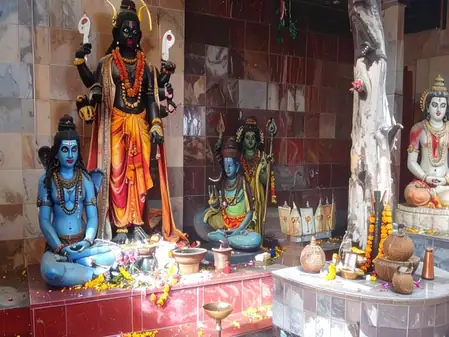
Kolkata’s religious landscape boasts many wonders, but none quite like the Chinese Kali Temple in Tangra, where Maa Kali is propitiated with chow mein and momos instead of the usual oblations. This Chinatown gem highlights the seamless blend of Chinese heritage and Bengali spirituality, drawing crowds eager for both darshan and a taste of blessed street food.
The temple emerged from the Hakka Chinese enclave in Tangra, where residents embrace Hinduism wholeheartedly. As the only temple erected by this community, it adheres to Vedic rites overseen by Hindu priests, augmented by Chinese customs like Diwali’s candle-lit marathons of prayer.
Central to its allure is the prasad: shudh shakahari Chinese delicacies that have become ritual fixtures. Momos and noodles, offered consistently, embody the community’s devotion, shared post-puja in a festive atmosphere.
Its founding myth recounts a 60-year-old healing miracle. A gravely ill Chinese youth recovered after his family worshipped at a local tree-altar to Kali and Shiva. This divine intervention spurred the construction of the present-day shrine, with the venerated tree enduring as a wish-granting centerpiece.
Sustained by dedicated Chinese custodians, the temple promotes unity across cultures. In today’s diverse world, it serves as an inspiring model of adaptive faith, where everyday foods become holy offerings, enriching Kolkata’s spiritual heritage.