


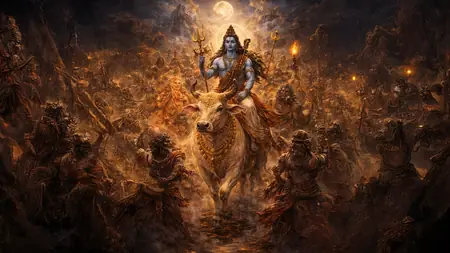
Maha Shivratri dawns with spiritual intensity, as faithful observe fasts and rituals commemorating Shiva-Parvati’s sacred wedlock. This isn’t mere tradition; it’s rooted in a Puranic epic where the god of destruction’s wedding march was a supernatural extravaganza that literally shifted the Earth.
Shiva, epitome of austerity, donned his bridal best: snakes as necklaces, ashes as attire, weapons in grip, Nandi as steed. His baraat was a melting pot of the divine and demonic—deities alongside bhuts, prets, fierce pisachas, eccentric ganas exhibiting grotesque variety: no heads, surplus organs, bizarre proportions, animal allies slithering through.
Shockwaves hit Parvati’s camp hard. Mainavati swooned, villagers bolted, accusations flew at Narada. Parvati, however, stood firm in adoration. The parade’s colossal scale tilted Terra’s axis, prompting Shiva to deploy Agastya southwards for equilibrium. Brahma and Vishnu ushered it to Himalayan nuptials.
Vedic rites sealed the union, detailed in ancient lore. Today, this inspires global Shivratri fervor: Lingam anointings, bilva adorations, nocturnal bhajans, and marriage kathas that pledge fortune and tranquility. Beyond spectacle, the story celebrates unyielding love conquering fear.
In essence, Maha Shivratri embodies Shiva’s paradoxical grace—terrifying yet transformative. Devotees tonight seek his grace to navigate life’s imbalances, drawing from this timeless legend of cosmic romance and earthly steadiness.