


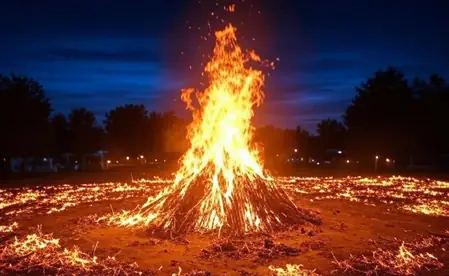
Deep in Uttar Pradesh’s Saharanpur, Barsai village crafts its Holi narrative differently: no Holika blaze scorches the night sky. While the country gathers wood for the ritual, Barsians travel outward, preserving a sacred precinct for color-soaked celebrations.
The reason? A revered west-facing Shivling in the ancient temple, born of Mahabharata drama. Kauravas built the structure 5,000 years back, but Pandava Bhima, in wartime fury, embedded his gada, forcibly reorienting it—a phenomenon making it India’s only westward deity.
Sacred lore warns that Holika’s fire could injure Shiva’s feet, compelling this millennia-spanning abstinence. Beyond religion, it embodies cultural resilience, linking past epics to present joys.
Krishna’s wartime visit cemented Barsai’s holiness; delighted, he equated it to Braj, bestowing the name symbolizing divine welcome.
Holi dawn brings tidal waves of revelry. Youth squads ambush with water guns, elders distribute sweets, and the air hums with folk tunes. Barsai’s Holi proves traditions can innovate, harmonizing antiquity with exuberance in a uniquely Indian way.