


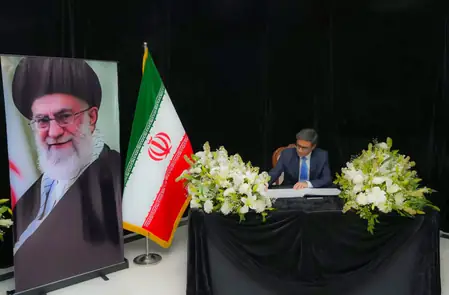
Dismissing online buzz about procrastination, India’s Ministry of External Affairs affirmed its immediate tribute to Iran’s fallen Supreme Leader Ayatollah Ali Khamenei during Thursday’s media interaction. Spokesperson Randhir Jaiswal implored citizens to fact-check before critiquing foreign policy moves.
The alleged five-day hold-up was pure fiction, Jaiswal asserted. Foreign Secretary Vikram Misri wasted no time: on March 5, as the condolence book debuted at New Delhi’s Iranian Embassy, he inscribed India’s sorrow and conferred with Ambassador Mohammad Fathali.
‘Formalities were observed on opening day itself,’ Jaiswal noted. ‘Before public statements, verify essentials. Shun uninformed critiques.’ Crowds poured in from March 5, 6, and 9—politicos, top bureaucrats, spiritual guides, thinkers, professors, and journalists—etching messages of shared loss.
The embassy’s March 11 thanks captured the breadth of support. Rooted in tragedy, 86-year-old Khamenei died February 28 from an Israel-US joint operation that also vaporized Iran’s defense minister, IRGC commander, and family members: his daughter-in-law, daughter, grandson, plus his wife from subsequent medical complications.
This clarification not only quells doubts but elevates discourse standards. In volatile times, India’s prompt empathy fortifies ties with Iran, modeling restraint and respect. The MEA’s stance is a beacon against the fog of unverified narratives shaping public opinion.