


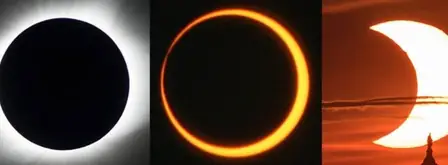
Get ready for 2026’s inaugural solar spectacle on February 17 – an annular eclipse lighting up the ‘Ring of Fire’ over Antarctica’s vast, frozen expanses. The highlight? A brilliant ring phase enduring about 2 minutes and 20 seconds.
Eclipses ignite when Moon, Earth, and Sun queue in a straight line, with the Moon interrupting solar rays. Eclipse seasons strike twice annually, pinned to the Moon’s orbital tilt.
The ‘fire ring’ emerges because the Moon, positioned afar, silhouettes smaller against the Sun, exposing its glowing perimeter. No show for India, but worldwide interest surges.
Four eclipse archetypes define these sky dramas. Totals blanket the Sun entirely, spawning darkness and corona visibility – pinnacle events sparking global pilgrimages.
Annulars, our focus, forge fiery halos. Partials obscure fractions, mimicking lunar phases on the Sun. Hybrids blend both totals and annuluses, shifting along the track via Earth’s bulge and shadow play.
From ancient omens to modern probes, eclipses propel science forward, calibrating atomic clocks and probing solar winds. Safety first: never view unprotected; solar retinopathy risks are real.
Anticipate vivid imagery from Antarctic outposts. This eclipse heralds a year of cosmic highlights, inviting all to ponder our place in the vast universe’s rhythmic ballet.