


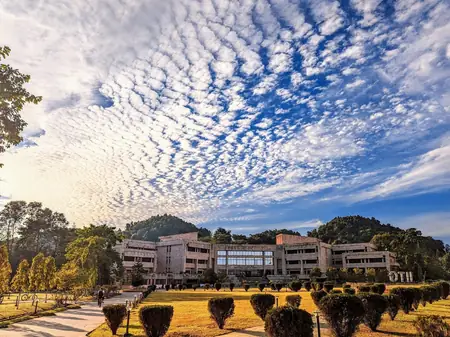
Elevating nuclear infrastructure to new safety heights, IIT Guwahati’s researchers have pioneered a specialized cement mortar that halts nuclear radiation in its tracks, all while providing exceptional structural fortitude. This indigenous breakthrough, born from analyses of Chernobyl and Fukushima, equips builders with tools to prevent radiation breaches under the harshest scenarios.
The mortar’s edge comes from integrating four key microparticles: boron oxide for amplified shielding, lead oxide for enhanced density, tungsten oxide for superior fracture resistance, and bismuth oxide as a versatile absorber. The Civil Engineering Department’s creation withstands seismic shocks, detonations, and thermal extremes, ensuring containment integrity.
Professor Hrishikesh Sharma, the project’s driving force, stated, ‘We aim for materials that defy devastation from heat and radiation alike.’ Featured in the esteemed Materials and Structures, the research unites Sharma, doctoral candidate Sanchit Saxena, and CSIR-Roorkee expert Dr. Suman Kumar.
Future phases focus on concrete-scale integration, structural validations of reinforced elements, and particle optimization for optimal mechanicals, practicality, durability, and attenuation. It holds promise for securing nuclear facilities, small modular reactors, diagnostic X-ray suites, and radiation therapy rooms.
As global energy strategies lean on nuclear power to satisfy surging demands and climate imperatives, fortified protections become paramount. This mortar minimizes leakage threats in reactors and high-risk venues, fostering reliable barriers and advancing the resilience of atomic deployments everywhere.